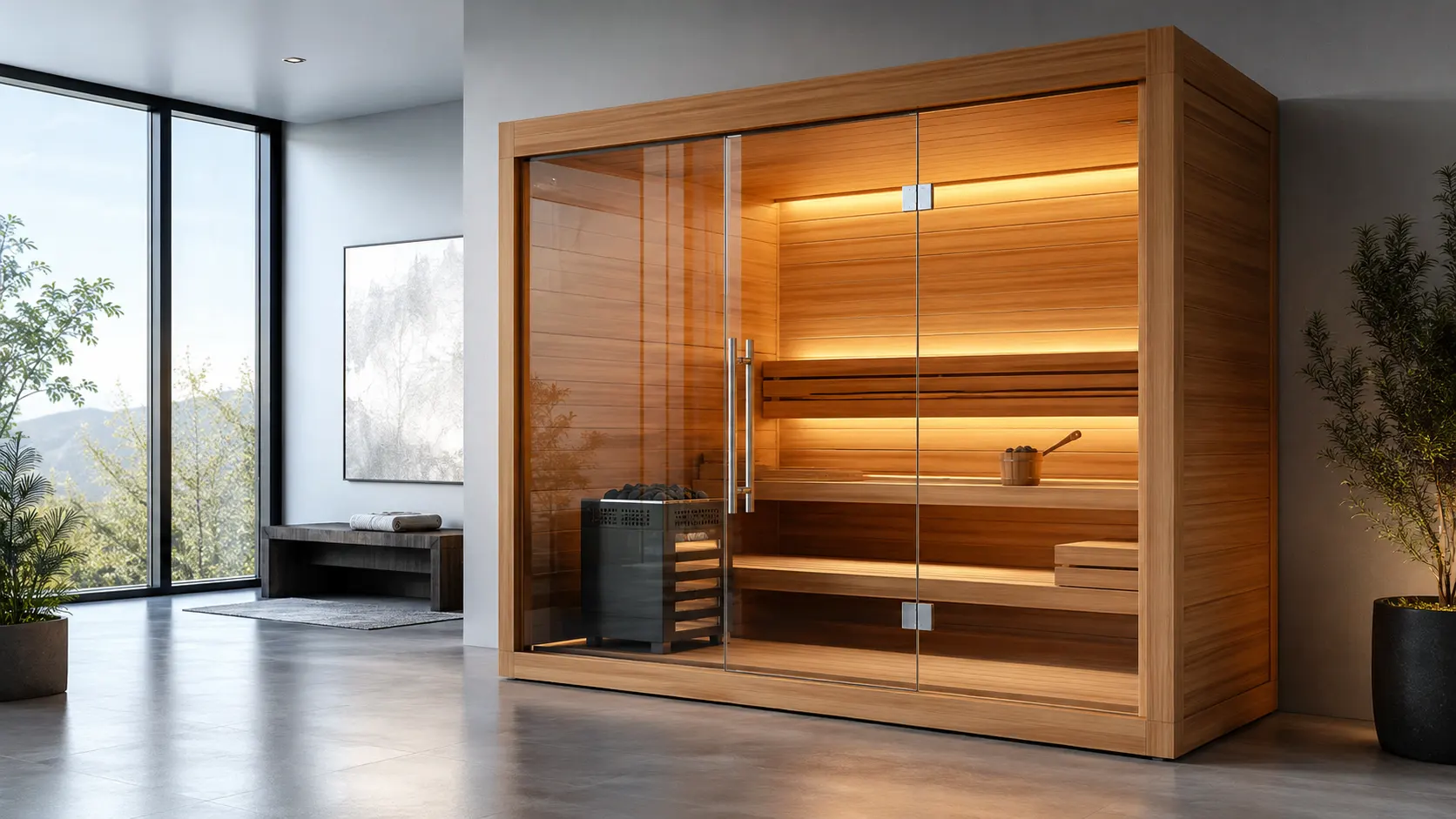
What Makes a Good Sauna Wood?
Not all timber suits the heat and humidity of a sauna. The best sauna woods share these qualities:- Low heat conductivity: soft, low-density woods stay comfortable to touch even at high temperatures, essential for benches.
- Moisture and rot resistance: the wood must handle repeated heat and humidity without warping or decaying.
- Minimal resin and knots: resinous woods can leak sap and knots can become uncomfortably hot.
- Stability: it should resist cracking and warping over years of thermal cycling.
- Aroma and appearance: from the rich scent of cedar to the clean, pale look of aspen, personal preference matters.
Western Red Cedar: The Premium Choice
Cedar is the most popular premium sauna wood for good reason. It is naturally resistant to moisture, decay and warping, has beautiful reddish tones, and releases a pleasant, calming aroma when heated. Its low density means it stays comfortable to touch. The main trade-off is cost, cedar sits at the higher end, but for many it is worth every dirham for the aroma and longevity.Nordic Spruce: The Traditional Finnish Option
Spruce is the classic wood of authentic Finnish saunas. It is affordable, light in colour and gives a bright, traditional look. Good-quality spruce is a fantastic value choice, though it can contain more knots and resin than cedar, so quality grading matters to avoid sap pockets. It is a popular pick for those wanting an authentic sauna on a sensible budget.Hemlock: The Clean, Mid-Range All-Rounder
Canadian or Western hemlock offers a smooth, pale, near-knot-free surface with very little aroma, making it ideal for anyone sensitive to strong scents. It sits between spruce and cedar on price and gives a clean, modern appearance. Hemlock is less naturally rot-resistant than cedar, so proper ventilation and care are important, but it remains a reliable, attractive choice.Excellent Alternatives
- Aspen: pale, knot-free and virtually odourless, a top choice for allergy sufferers and those who dislike strong aromas.
- Basswood: soft, hypoallergenic and scent-free, commonly used in infrared saunas.
- Thermally modified woods: heat-treated spruce or aspen with enhanced stability, rot resistance and a richer, darker tone.
Sauna Wood Comparison
| Wood | Aroma | Moisture Resistance | Cost | Best For |
|---|---|---|---|---|
| Western Red Cedar | Rich, aromatic | Excellent (natural) | Premium | All-round premium builds |
| Nordic Spruce | Light, traditional | Good with care | Affordable | Authentic Finnish look on a budget |
| Hemlock | Very low | Good with care | Mid-range | Clean, modern, scent-sensitive users |
| Aspen / Basswood | Odourless | Good | Mid to premium | Allergy sufferers, infrared saunas |
Which Wood Should You Choose?
- For the best all-round experience: Western Red Cedar.
- For an authentic look on a budget: Nordic spruce.
- For a clean, modern, low-scent finish: hemlock.
- For allergies or scent sensitivity: aspen or basswood.
Caring for Sauna Wood in Dubai's Climate
Dubai's humidity and heat make wood care especially important. Dust regularly, wipe down benches after use, and apply a suitable wood conditioner or protective oil to porous woods twice a year to prevent drying and preserve the grain. Good ventilation is essential to avoid moisture issues. Our sauna maintenance and wood care service keeps timber looking and performing its best, and our cleaning guide covers the essentials you can do yourself.Build your sauna with the perfect wood.
As Dubai's sauna and steam room experts, we source premium graded timber and match it to your design, budget and climate. Book a consultation, or explore our ready-made pre-built sauna rooms.