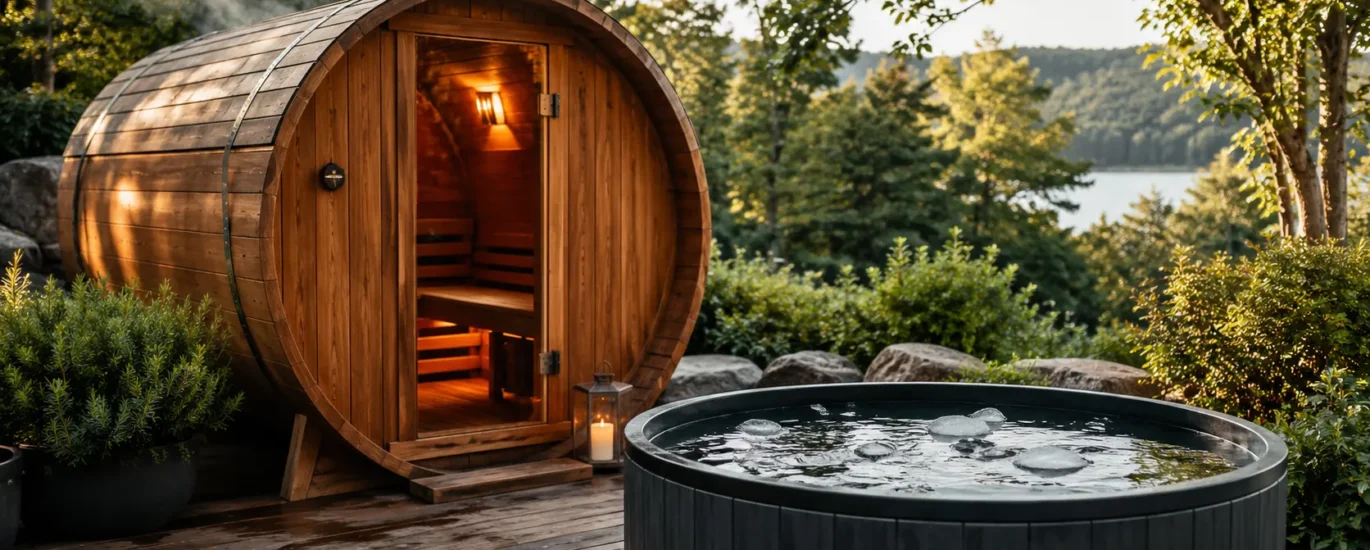
The combination of sauna and cold plunge, known as contrast therapy, has moved from Nordic tradition to one of the most popular and evidence-backed recovery practices in modern wellness. By alternating intense heat with cold immersion, contrast therapy delivers a powerful boost to circulation, recovery, mood and resilience. This guide explains how it works, the science behind it, how to do it safely, and how to set up your own sauna and cold plunge routine at home in Dubai.
Quick summary: Contrast therapy alternates a hot sauna with a cold plunge, creating a "vascular pump" that boosts circulation and flushes metabolic waste. Benefits include faster recovery, reduced soreness, improved mood and stress resilience. A typical routine is sauna first (10–15 min), then a cold plunge (1–3 min), repeated for 2–3 cycles, a few times a week.
What Is Contrast Therapy?
Contrast therapy is the deliberate alternation between heat exposure, such as a sauna, and cold immersion, such as a cold plunge or ice bath. The practice has deep roots in Finnish sauna culture and Roman bathing, where people would move from hot rooms straight into cold water. Today it is embraced by athletes, wellness centres and health enthusiasts worldwide for its combined physical and mental benefits.
How the Sauna and Cold Plunge Cycle Works
The magic lies in what many call the "vascular pump." In the sauna, your core temperature rises, your heart rate climbs to a level similar to moderate exercise, and blood vessels near the skin dilate. When you move into a cold plunge, those vessels rapidly constrict, redirecting blood toward your core. Repeating this hot-cold cycle repeatedly flushes metabolic waste from tissues and drives fresh, oxygen-rich blood through the body, more effectively than a long session of heat or cold alone.
The Benefits of Sauna and Cold Plunge
- Faster recovery: the circulatory flush helps clear the waste products that cause muscle soreness after exercise.
- Improved circulation: alternating vasodilation and vasoconstriction acts like a workout for your blood vessels.
- Better mood and alertness: cold immersion triggers a surge of norepinephrine and endorphins that sharpen focus and lift mood.
- Reduced stress: heat lowers stress hormones, and the practice trains your nervous system to handle stress more calmly.
- Cardiovascular support: long-term Finnish research links frequent sauna use to better heart-health outcomes.
- Resilience: the controlled stress builds mental toughness and adaptability over time.
How to Do Contrast Therapy Safely
Most people start with the sauna, as warming up first maximises relaxation and makes the cold plunge more effective. A simple, well-supported routine looks like this:
| Phase | Duration | Notes |
|---|
| Sauna (heat) | 10–15 minutes | Warm up thoroughly |
| Cold plunge | 1–3 minutes | Enter gradually, breathe calmly |
| Repeat | 2–3 cycles | Finish on cold to feel invigorated, or warm to feel relaxed |
Two to four sessions a week suits most people, with little added benefit beyond around five. Always stay hydrated and listen to your body.
An Important Nuance for Muscle Growth
If your main goal is building muscle, note that some research suggests aggressive cold immersion immediately after strength training may blunt the signalling that drives muscle growth. In that case, leave a few hours between your workout and your cold plunge, or use the sauna for recovery and save cold exposure for non-lifting days.
Who Should Be Cautious
Consult a doctor before starting, or avoid contrast therapy, if you: have an unstable heart condition, uncontrolled high blood pressure, Raynaud's disease, are pregnant, or have open wounds or an active infection. Enter cold water gradually, never plunge alone if you are new to it, and stop if you feel unwell.
Setting Up Sauna and Cold Plunge at Home in Dubai
A home contrast-therapy setup pairs a quality sauna with a cold plunge or cold shower. The sauna is the heart of the system, powered by a reliable sauna heater, and in Dubai's climate a chilled plunge or cool experience shower provides the cold phase. For a fast, elegant sauna solution, our pre-built saunas are ideal. To choose the right sauna type, see our guide to what sauna rooms are and the benefits of infrared saunas.
Build your own recovery ritual.
As sauna specialists in Dubai, we design and install premium saunas that form the heart of a home contrast-therapy setup. Book a consultation to plan your sauna and cold plunge space.
Conclusion
Sauna and cold plunge contrast therapy is far more than a wellness trend, it is a centuries-old, increasingly well-researched practice that boosts recovery, circulation, mood and resilience. Start with the sauna, keep cold plunges short, build up gradually, and respect the safety cautions. With a quality home sauna at its heart, contrast therapy becomes a powerful, invigorating ritual you can enjoy year-round.
Frequently Asked Questions
What is contrast therapy?
Contrast therapy is the deliberate alternation between heat, such as a sauna, and cold, such as a cold plunge or ice bath. It creates a circulatory "pump" that boosts blood flow, flushes metabolic waste and supports recovery, rooted in Finnish and Roman bathing traditions.
Should I do sauna or cold plunge first?
Most people start with the sauna. Warming up first maximises relaxation and makes the subsequent cold plunge more effective and invigorating. You can finish on cold to feel energised and alert, or end warm if you prefer to feel relaxed.
How long should a sauna and cold plunge session be?
A typical cycle is 10–15 minutes in the sauna followed by 1–3 minutes in the cold plunge, repeated for 2–3 rounds. A full session usually takes around 30–60 minutes. Always stay hydrated and adjust to your comfort and experience level.
How often should I do contrast therapy?
Two to four sessions a week suits most people, with athletes in heavy training sometimes doing more. There is little evidence of extra benefit beyond about five sessions weekly, so consistency matters more than frequency.
What are the benefits of sauna and cold plunge?
Benefits include faster muscle recovery, reduced soreness, improved circulation, better mood and alertness, lower stress, cardiovascular support and greater resilience. Combining heat and cold delivers effects that neither achieves as strongly on its own.
Who should avoid contrast therapy?
Avoid contrast therapy, or consult a doctor first, if you have an unstable heart condition, uncontrolled high blood pressure, Raynaud's disease, are pregnant, or have open wounds or an active infection. Always enter cold water gradually and never plunge alone when new to it.
This article is for general wellness information only and is not medical advice. If you have a health condition, are pregnant, or feel unwell, consult a qualified healthcare professional before starting contrast therapy.