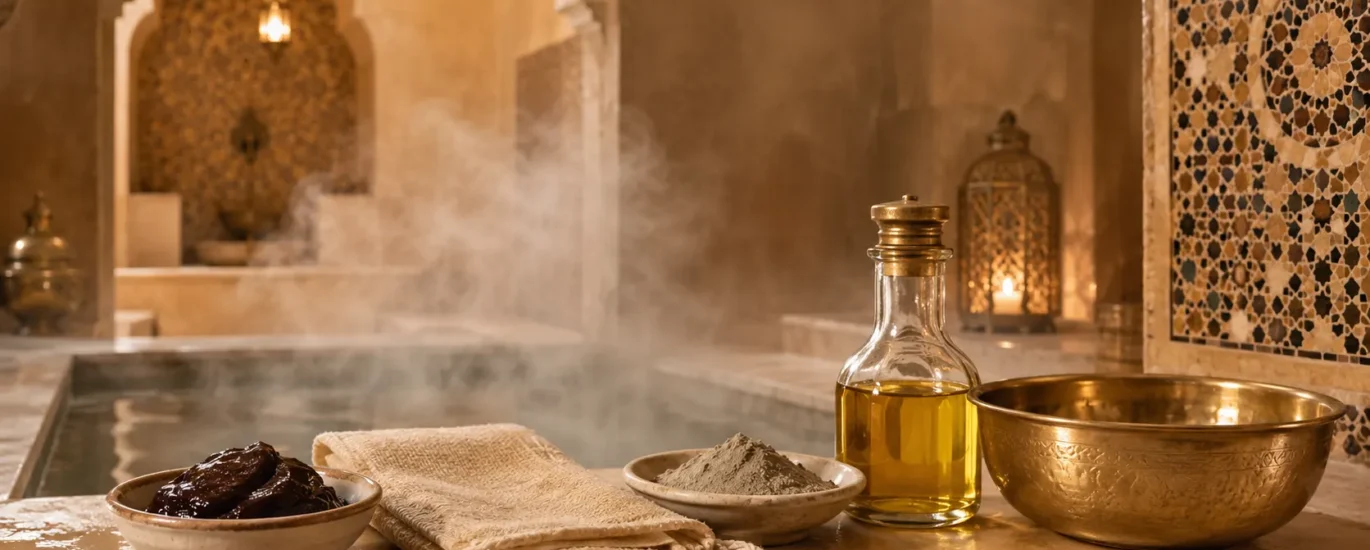
The Moroccan bath is one of the most luxurious and deeply cleansing wellness rituals in the world, blending steam, natural black soap and rich exfoliation into an experience that leaves skin remarkably soft and refreshed. A firm favourite in Dubai's spas and increasingly popular in luxury homes, it offers both indulgence and genuine skin benefits. This guide explains what a Moroccan bath is, what to expect step by step, its benefits, and how it compares to other hammam traditions.
Quick summary: A Moroccan bath uses warm steam, olive-based black soap (savon beldi), deep exfoliation with a kessa glove, and often a rhassoul clay mask and argan oil. The result is deeply cleansed, exfoliated and softened skin, improved circulation and deep relaxation. It is a distinct ritual from the marble-focused Turkish bath.
What Is a Moroccan Bath?
A Moroccan bath, or Moroccan hammam, is a traditional North African cleansing ritual centred on steam and natural skincare ingredients. Warm, humid air opens the pores, then a sequence of black soap, vigorous exfoliation and nourishing clay and oils cleanses and revitalises the skin. It is a treatment that combines centuries-old tradition with genuinely effective skincare.
The Moroccan Bath Ritual, Step by Step
- Steam: you relax in a warm, steamy room as the humidity opens your pores and softens the skin.
- Black soap (savon beldi): a rich, olive-based soap is applied all over and left to work for several minutes.
- Exfoliation: a coarse kessa glove is used to scrub away dead skin cells, revealing smoother skin beneath.
- Rhassoul clay mask: a mineral-rich clay is often applied to draw out impurities and nourish the skin.
- Rinse and argan oil: warm water rinses everything away, and argan oil is applied to moisturise and add a healthy glow.
The Benefits of a Moroccan Bath
- Deep exfoliation: removes dead skin cells for noticeably smoother, softer skin.
- Thorough cleansing: black soap and clay draw out impurities and unclog pores.
- Improved circulation: the warmth and massage stimulate blood flow.
- Nourished skin: argan oil and rhassoul clay hydrate and revitalise.
- Deep relaxation: the unhurried ritual soothes both body and mind.
Moroccan Bath vs Turkish Bath
Both are cleansing hammam rituals, but they differ in ingredients and setting:
| Feature | Moroccan Bath | Turkish Bath |
|---|
| Signature product | Black soap, rhassoul clay, argan oil | Foam soap on heated marble |
| Focus | Skincare and exfoliation | Cleansing and relaxation on a marble slab |
| Setting | Steamy room | Marble hammam with a heated slab |
To explore the alternative, read our guide to Turkish bath benefits. Many premium spas offer both experiences.
How Often Should You Have a Moroccan Bath?
Once or twice a month suits most people, allowing time for the skin to renew between deep exfoliation sessions. Those with sensitive skin may prefer less frequently. As with any heat-based treatment, stay hydrated and avoid it if you have active skin irritation.
Installing a Moroccan Bath at Home in Dubai
A home Moroccan bath needs a warm, steamy, fully waterproofed space with reliable steam, proper drainage and beautiful, moisture-resistant finishes such as tadelakt plaster or tile. In Dubai, correct waterproofing and a properly sized steam system are essential. Our Moroccan bath supply and installation service handles the full design and build, and pairs beautifully with a Turkish bath installation or an experience shower for a complete spa suite.
Enjoy an authentic Moroccan bath at home.
As a spa and hammam installation company in Dubai, we design and build authentic Moroccan baths, Turkish baths and steam rooms for homes, hotels and spas across the UAE. Book a consultation today.
Conclusion
The Moroccan bath is a truly indulgent ritual that delivers real results: deeply exfoliated, cleansed and nourished skin, improved circulation and profound relaxation. Its blend of steam, black soap, exfoliation and nourishing clay and oils sets it apart from other hammam traditions. Whether enjoyed at a spa or installed in your own Dubai home, a Moroccan bath is a luxurious addition to any wellness routine.
Frequently Asked Questions
What is a Moroccan bath?
A Moroccan bath, or Moroccan hammam, is a traditional North African cleansing ritual using warm steam, olive-based black soap, deep exfoliation with a kessa glove, and often a rhassoul clay mask and argan oil, leaving the skin deeply cleansed, exfoliated and softened.
What are the benefits of a Moroccan bath?
Benefits include deep exfoliation for smoother skin, thorough cleansing that unclogs pores, improved circulation, nourished and hydrated skin from clay and argan oil, and profound relaxation from the warm, unhurried ritual.
What happens during a Moroccan bath?
You relax in a steamy room to open the pores, then black soap is applied and left to work, followed by vigorous exfoliation with a kessa glove, an optional rhassoul clay mask, a warm rinse, and finally nourishing argan oil to moisturise the skin.
What is the difference between a Moroccan bath and a Turkish bath?
A Moroccan bath focuses on skincare, using black soap, rhassoul clay and argan oil for deep exfoliation in a steamy room. A Turkish bath centres on a heated marble slab with a foam-soap massage. Both cleanse and relax, but the ingredients and setting differ.
How often should you get a Moroccan bath?
Once or twice a month suits most people, giving the skin time to renew between deep exfoliation sessions. Those with sensitive skin may prefer less frequently. Stay hydrated and avoid the treatment if you have active skin irritation.
Can I have a Moroccan bath installed at home in Dubai?
Yes. A home Moroccan bath requires a warm, steamy, fully waterproofed space with reliable steam, proper drainage and moisture-resistant finishes such as tadelakt or tile. Professional installation ensures an authentic, durable result that meets Dubai standards.