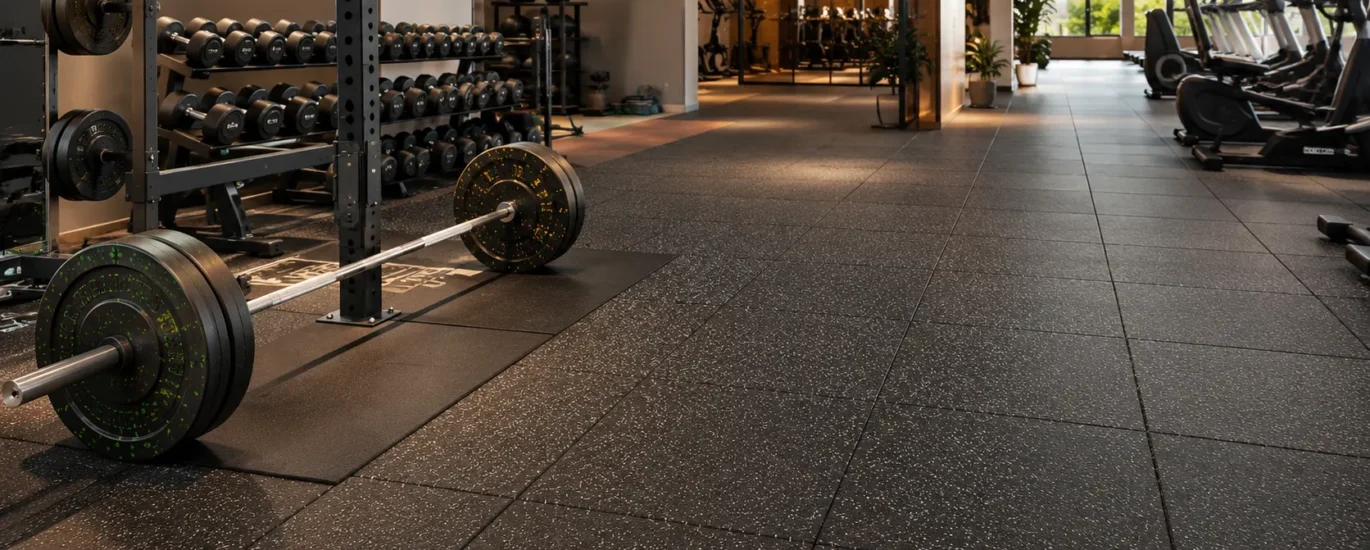
The right gym flooring protects your subfloor, cushions your joints, reduces noise and keeps every workout safe, whether you are kitting out a commercial fitness centre or a home gym. With so many options, from rubber tiles to foam and vinyl, choosing the best gym flooring in Dubai can be confusing. This guide breaks down the main types, the ideal thickness for each use, and how to select flooring that lasts in Dubai's demanding conditions.
Quick summary: Rubber flooring is the best all-round choice for most gyms, offering durability, shock absorption and grip. Thickness should match the activity, thin for cardio, thick for free weights and drop zones. Foam suits light home use, while vinyl works for studios. In Dubai, durability and easy cleaning are key.
Why Gym Flooring Matters
Good gym flooring does far more than look tidy. It protects your subfloor and equipment from heavy impacts, absorbs shock to reduce noise and vibration, cushions joints to lower injury risk, and provides a safe, non-slip surface. Investing in the right flooring extends the life of both your gym and your equipment.
Types of Gym Flooring
- Rubber tiles: interlocking or loose-lay tiles, easy to install and replace, ideal for most gym areas.
- Rubber rolls: cover large areas quickly with fewer seams, popular for commercial gyms.
- EPDM rubber: premium coloured-fleck rubber offering durability and a smart appearance.
- Foam/EVA tiles: soft and affordable, best for stretching, yoga and light home use, not heavy weights.
- Vinyl/PVC: smooth and easy to clean, suited to studios and functional spaces.
- Turf: ideal for sled tracks, functional training and prowler work.
- Lifting platforms: reinforced zones for Olympic lifting and heavy drops.
For sports halls and multi-use courts, our sports flooring range offers dedicated solutions.
Gym Flooring Thickness Guide
| Thickness | Best For |
|---|
| 6–8 mm | Cardio areas, light functional training, general use |
| 10–15 mm | Mixed free-weight and cardio zones |
| 15–20 mm | Free-weight areas and moderate lifting |
| 20–30 mm+ | Heavy lifting, drop zones and functional training |
| 40–50 mm | Dedicated Olympic lifting platforms |
Choosing Flooring by Zone
- Free-weight areas: thick rubber (15 mm and above) to absorb heavy impacts and protect the floor.
- Cardio zones: thinner rubber (6–8 mm) for a stable, comfortable base under machines.
- Functional/CrossFit areas: thick rubber and turf strips for varied training and sled work.
- Home gyms: rubber tiles for versatility, or foam for light, low-impact use.
Rubber vs Foam vs Vinyl
Rubber is the most durable and shock-absorbent, making it the top choice wherever weights are used. Foam is soft, light and cheap but unsuitable for heavy loads. Vinyl is smooth and hygienic, ideal for studios and low-impact spaces. For many gyms, a combination, rubber in the weights area, vinyl in studios, is the smart approach. Our vinyl flooring service covers the latter.
Gym Flooring for Dubai's Conditions
In Dubai, gym flooring must withstand heavy use, resist heat and humidity, and be easy to clean and sanitise. High-quality rubber and EPDM handle these demands well and stay looking good for years. For commercial gyms with constant footfall, durability and slip resistance are especially important, and professional installation ensures a seamless, safe finish.
Installation Considerations
A level, clean subfloor is essential for a professional result. Rolls suit large open areas, while tiles allow flexible layouts and easy replacement of worn sections. Correct adhesive or interlocking systems, proper edging and accurate cutting all affect the finish and longevity. We handle the full gym flooring supply and installation, and keep facilities in top shape with ongoing gym maintenance.
Kit out your gym with the right flooring.
As a Dubai gym and wellness fit-out company, we supply and install rubber, EPDM, vinyl and sports flooring for commercial and home gyms across the UAE. Book a consultation today.
Conclusion
The best gym flooring in Dubai matches the material and thickness to how the space is used: durable, shock-absorbing rubber for weights, thinner rubber for cardio, and vinyl or foam for studios and light home use. Choose quality flooring built for heavy use and Dubai's climate, install it professionally, and you will protect your investment while creating a safe, comfortable and great-looking gym.
Frequently Asked Questions
What is the best flooring for a gym?
Rubber flooring is the best all-round choice for most gyms, offering excellent durability, shock absorption, grip and noise reduction. Tiles and rolls both work well, with the ideal thickness depending on whether the area is used for cardio, free weights or heavy lifting.
How thick should gym flooring be?
Cardio and general areas suit 6–8 mm, mixed zones 10–15 mm, free-weight areas 15–20 mm, and heavy lifting or drop zones 20–30 mm or more. Dedicated Olympic lifting platforms often use 40–50 mm. Match thickness to the heaviest activity in each area.
What flooring is best for free weights?
Thick rubber flooring, typically 15 mm and above, is best for free-weight areas. It absorbs the impact of dropped weights, protects the subfloor, reduces noise and provides a stable, safe surface for lifting.
Is rubber or foam better for a home gym?
Rubber is better for any home gym where weights are used, thanks to its durability and shock absorption. Foam is fine for light, low-impact activities like stretching and yoga, but it will not withstand heavy weights or intense training.
Does gym flooring reduce noise?
Yes. Quality rubber flooring absorbs shock and vibration, significantly reducing the noise of dropped weights and machine use. Thicker flooring provides greater noise and impact reduction, which is especially valuable in home and multi-storey gyms.
Can you supply and install gym flooring in Dubai?
Yes. We supply and install rubber, EPDM, vinyl and sports flooring for commercial and home gyms across Dubai and the UAE, matching the material and thickness to your space and installing it professionally for a safe, durable finish.